

Persistent Hot and Cold Spots: When an AC Installation Service Should Reassess Capacity
Why can one room stay uncomfortable when the AC is running?
Switching on an air conditioner does not always mean every part of a room will immediately feel the same.
You may notice that one side of a room remains warm, a bedroom becomes too cold while the hallway stays uncomfortable, or a home office struggles to reach the desired temperature even though the system has been operating for some time.
There can be several explanations. The issue may relate to system capacity, airflow, indoor unit position, room layout, heat gain or the way connected spaces are being used.
When persistent temperature differences appear, it can be useful to have the installation assessed rather than simply lowering the thermostat or increasing the fan speed.
What causes persistent hot and cold spots?
Uneven temperatures can develop for several reasons.
Common possibilities include:
- The system is not adequately matched to the room
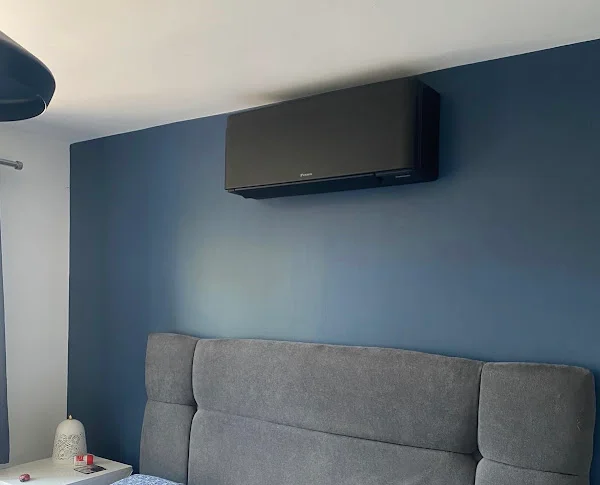
- The indoor unit is poorly positioned for the space
- Airflow is obstructed by furniture or room features
- Large windows create significant localised heat gain
- Doors are frequently opened between rooms
- The space has changed since the system was installed
- The property has areas with different insulation levels
- One system is being expected to condition too many connected spaces
- Filters or components require attention
- Air distribution does not suit the room layout
Not every temperature difference indicates a capacity problem. That distinction is important because replacing equipment is not necessarily the appropriate solution.
When should an AC system be reassessed?
A reassessment can be useful when an issue is persistent rather than occasional.
For example, it may be worth investigating if:
- One room regularly remains warmer than the others
- The system runs for long periods without achieving the desired temperature
- Some areas become uncomfortably cold while others remain warm
- The problem occurs repeatedly during warmer weather
- A room has been renovated or extended
- Furniture or room layout has changed significantly
- A new home office or heat-producing equipment has been introduced
- Windows or insulation have been upgraded
- The property’s use has changed
These changes can alter the conditions under which the original system was selected.
If your AC system consistently struggles with one area, an assessment from experienced ac installation services can help establish whether the problem relates to capacity, airflow, positioning or another factor.
Could the problem be caused by airflow rather than capacity?
Yes.
An air conditioner can have sufficient capacity while still distributing conditioned air poorly.
The position of the indoor unit, direction of airflow and obstacles within the room can all affect how cooled air travels.
For example, a unit mounted at one end of a long room may not distribute air evenly if the layout prevents airflow from reaching the far side effectively.
Furniture can also interfere with circulation. Large cupboards, shelving or other obstructions may redirect airflow or prevent conditioned air from reaching the areas where it is most needed.
This is why simply installing a more powerful unit is not always the answer.
Can windows create localised hot spots?
They can.
A room may feel noticeably warmer near large areas of glazing, particularly when direct sunlight enters for several hours.
Even if the overall room temperature appears acceptable, the area next to a sunny window may feel significantly warmer.
This can create the impression that the entire air conditioning system is underpowered when the issue may instead involve localised solar heat gain.
Shading, curtains, blinds and glazing characteristics can all influence this effect.
A proper assessment should consider the room’s heat sources before concluding that a larger system is required.
What if the room is larger than originally planned?
This can change the cooling requirement.
Perhaps a small home office has been converted into a larger workspace, a partition has been removed, or two rooms have effectively become one open area.
Even without structural changes, the way the room is used may have changed.
For instance, a room that previously contained a desk and one occupant may now be used by several people with multiple computers and monitors operating throughout the day.
The original installation may have been appropriate when it was designed but less suitable for the property’s current use.
Can extensions affect an existing AC system?
Yes, depending on how the extension changes the space.
An extension may introduce:
- Additional floor area
- New glazing
- Different insulation characteristics
- More external walls
- New heat sources
- Changes to airflow
- A different room configuration
If an existing indoor unit is now expected to cool a significantly larger area, the original capacity calculation may no longer represent the current space.
How can an installer distinguish between a capacity problem and an installation problem?
The first step is usually to understand what the system is currently doing.
An assessment may consider:
| Observation | What it could indicate |
|---|---|
| Entire room stays warm | Capacity, heat gain or system performance issue |
| Only one corner stays warm | Airflow or local heat gain |
| Room cools very slowly | Capacity, heat gain or operating issue |
| One room is cold while another is warm | Air distribution or separate room requirements |
| Problem began after renovation | Changed cooling load or layout |
| Issue occurs only in strong sunlight | Solar heat gain |
| Airflow feels weak | Air distribution or equipment condition |
| System reaches temperature but comfort varies | Airflow, positioning or local heat sources |
These are indicators rather than diagnoses. A professional assessment is needed to establish the actual cause.
Does an air conditioner need to be larger if a room feels hot?
Not necessarily.
Increasing capacity without understanding the cause can fail to address the underlying issue.
If the problem is poor airflow, a larger unit may still distribute air poorly. If a particular area receives substantial solar gain, the issue may involve the room’s heat exposure rather than the overall system capacity.
Likewise, if filters or other components require attention, changing the equipment may be unnecessary.
A suitable solution should therefore begin with identifying why the room is uncomfortable.
Could indoor unit positioning be responsible?
It can have a significant effect on comfort.
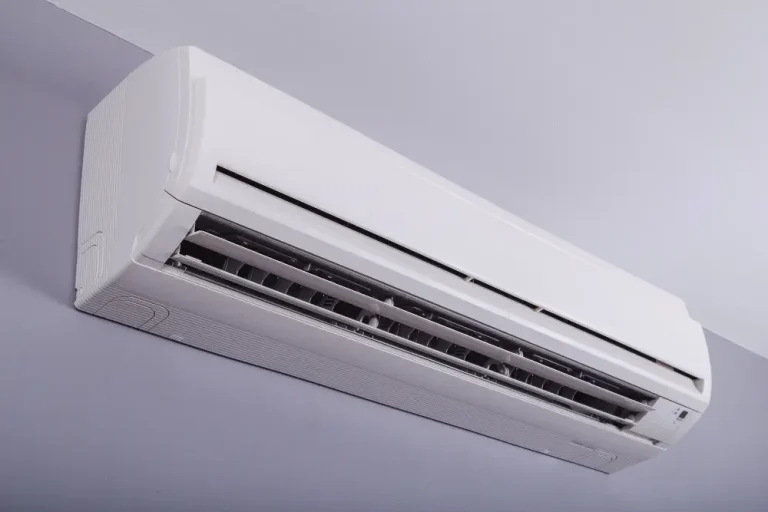
Indoor units need sufficient clearance and should be positioned so that conditioned air can circulate effectively.
The ideal location depends on the room’s shape, furniture, doors, windows and other features.
For example, positioning a unit where airflow immediately meets a large obstruction may reduce its ability to distribute conditioned air across the room.
The installation should therefore consider the whole space rather than treating the wall as simply a place to mount the equipment.
When should an existing system be checked after a property change?
It is sensible to consider an assessment when the building or its use has changed substantially.
Examples include:
- A loft conversion
- A house extension
- Removal of internal walls
- Creation of a large open-plan area
- Conversion of a bedroom into a home office
- Installation of substantial new electrical equipment
- Major glazing changes
- Changes to insulation
- A significant change in occupancy
These changes do not automatically mean the system needs replacing.
Instead, they provide a reason to check whether the existing arrangement is still appropriate.
If your property’s layout or usage has changed, an Oxford installer can review the existing system and identify whether its original assumptions still apply.
How does system capacity relate to installation cost?
Capacity is one component of the overall project, but it is not the only one.
The air con cost oxford homeowners encounter can vary according to equipment, number of indoor units, pipework, electrical requirements, access and installation complexity.
A system with a greater capacity may cost more, but that does not mean selecting a larger unit is automatically the correct solution.
The objective is to select equipment appropriate for the actual cooling requirement while designing the installation around the property.
This is another reason to avoid choosing a system based purely on price or nominal capacity.
What should you check before replacing an underperforming AC system?
Before assuming the equipment needs replacing, consider whether the issue could have another explanation.
Ask:
- Has the room’s use changed?
- Has the layout changed?
- Are windows or other heat sources creating additional heat?
- Is airflow reaching the problem area?
- Is anything obstructing the indoor unit?
- Does the issue occur throughout the day or only during strong sunlight?
- Has the system been properly maintained?
- Does the problem affect one room or several?
- Has the property been extended?
- Was the original system designed for the current room arrangement?
These questions can help establish what needs investigating before replacement becomes the assumed solution.
How can an installer reassess an existing system?
A useful reassessment should begin with the property as it exists today.
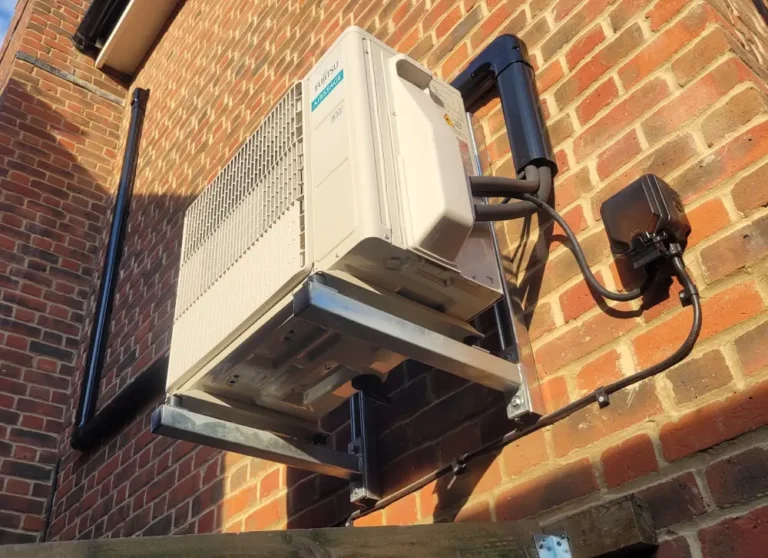
The installer can review the affected room, system specification, indoor unit location, outdoor equipment, airflow and current usage.
Where necessary, the cooling requirement can be reconsidered based on the current room conditions rather than simply relying on the original installation details.
This is particularly useful where a property has changed since the system was first installed.
It also provides an opportunity to identify whether a relatively simple adjustment could improve comfort before considering more substantial work.
What if only one room has a problem?
A single uncomfortable room does not necessarily mean the whole system is unsuitable.
The cause could be specific to that room, such as:
- Different glazing
- Greater solar exposure
- More occupants
- More electrical equipment
- Different insulation
- Poor airflow
- Furniture blocking circulation
- A change in room use
In a multi-room property, each space can behave differently.
An assessment should therefore consider the affected room and its relationship with the rest of the system.
If one room continues to feel too warm or too cold, contact TRS Cooling for advice on whether the system, airflow and room conditions should be reassessed.