
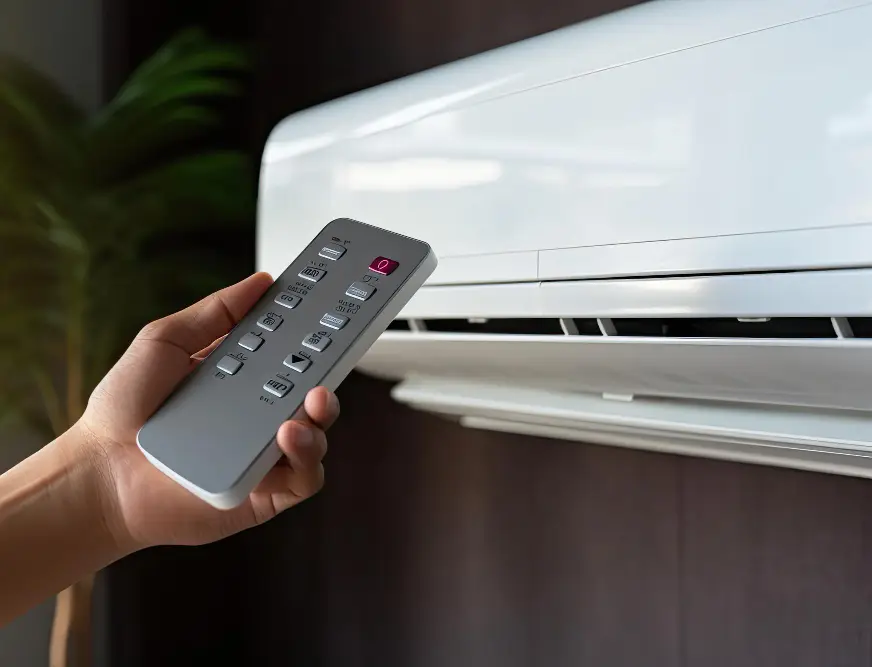
Bigger Is Not Always Better: Why Oversized Wall-Mounted AC Can Feel Less Comfortable
When a room gets uncomfortably warm, choosing a more powerful air conditioner can seem like the obvious solution. More cooling capacity sounds like it should mean faster cooling and greater comfort.
In practice, however, an oversized system is not always the best choice. If the capacity is significantly higher than the room’s actual cooling requirement, the unit may cool the air very quickly without running for long enough to provide consistent temperature and humidity control.
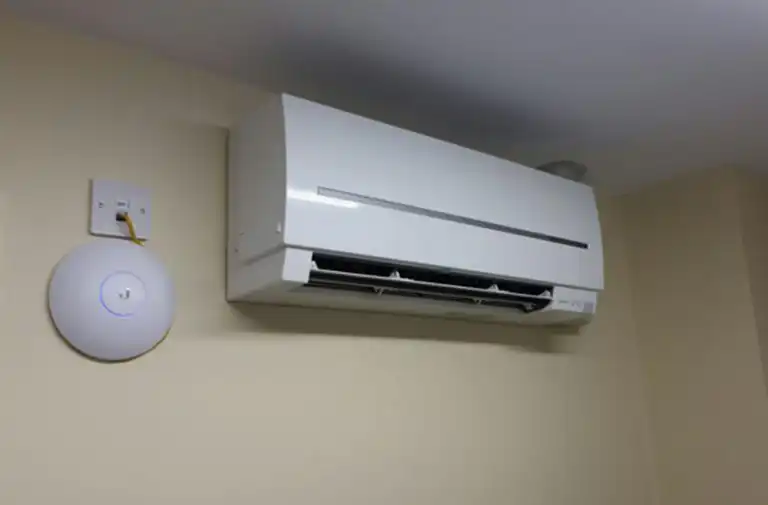
This is particularly important when choosing a wall mounted air conditioning unit for a bedroom, home office or living space. Correct sizing is about matching the system to the room, rather than automatically choosing the largest capacity available.
What happens when an air conditioner is oversized?
An oversized air conditioner can reduce the room temperature quickly, causing the thermostat to reach its target soon after the system starts.
The unit then switches off or reduces its output. As the room warms again, it starts another cooling cycle.
This repeated pattern is known as short cycling. The exact behaviour depends on the equipment and controls, but frequent cycling can make temperature control less consistent.
A correctly sized system should have enough capacity to deal with the expected heat load while operating in a way that maintains comfortable conditions.
Why quick cooling is not always better
It may sound attractive to cool a room as quickly as possible, particularly after returning home on a warm afternoon. However, comfort is not determined by temperature alone.
Humidity, air movement and temperature stability all contribute to how a room feels.
A system that repeatedly switches on and off may reach the thermostat setting quickly while providing less consistent control of the overall room environment.
Can an oversized AC make a room feel less comfortable?
Yes. Oversizing can contribute to uneven temperature control and insufficient dehumidification, depending on the system and operating conditions.
Air conditioning removes heat from a room, but cooling also affects moisture in the air. Longer operating periods can provide more opportunity for the system to remove humidity.
If a powerful unit reaches its target temperature very quickly and stops, the room may not receive the same level of moisture control as it would from a properly sized system operating for longer periods.
This does not mean every oversized unit will cause obvious humidity problems. System type, controls, outdoor conditions and the property’s characteristics all matter.
If you are unsure whether your existing wall mounted air conditioning unit is correctly sized, TRS Cooling can assess the room and discuss whether capacity, positioning or system operation may be contributing to comfort problems.
Why is cooling capacity more complicated than room size?
Floor area provides a useful starting point, but it cannot describe every source of heat entering a room.
An installer may also consider:
- Window area and glazing specification
- Room orientation
- Solar exposure
- Insulation
- Ceiling height
- Number of occupants
- Computers and other electrical equipment
- Lighting
- Heat entering from adjoining spaces
- The room’s normal pattern of use
A south-facing home office with large windows and several computers may need substantially more cooling than a shaded bedroom of the same size.
At the same time, choosing an excessively powerful system simply because the room becomes hot at certain times may not address the underlying problem.
What are the signs that an AC unit could be oversized?
There is no single symptom that proves a system is oversized. However, several observations may justify having the installation assessed.
Potential signs include:
| Observation | What it may indicate |
| Temperature drops extremely quickly | Capacity may be high relative to the heat load |
| Unit frequently starts and stops | Possible short cycling |
| Room feels cool but humid | Limited dehumidification under short cycles |
| Temperature fluctuates noticeably | Controls or capacity may not suit the space |
| Some areas remain uncomfortable | Air distribution or positioning may also be involved |
| Energy use seems unexpectedly high | Equipment size, usage or system efficiency may need checking |
These symptoms can have several causes, so they should not automatically be blamed on oversizing.
Poor positioning, blocked filters, incorrect controls, inadequate insulation and refrigerant or mechanical faults can also affect performance.
Does a larger AC cost more to install?
Potentially, yes. Equipment capacity, system type and installation requirements all influence the overall price.
A larger unit may have a higher purchase cost, while a multi-room system can introduce additional indoor and outdoor equipment and more complex installation work.
However, choosing a smaller unit solely to reduce the initial air conditioner installation service cost is not necessarily appropriate either. If the system cannot deal with the room’s actual heat load, comfort can suffer during warmer periods.
The aim should be to identify the capacity the property genuinely requires.
How does a correctly sized system behave differently?
A correctly selected system should be capable of dealing with the expected cooling load without being dramatically oversized.
Modern air conditioning systems can often modulate their output, adjusting cooling capacity according to demand. This can help maintain a more stable indoor temperature rather than relying entirely on repeated full-power operation.
The extent of modulation varies between models, so the specific equipment still matters.
Correct sizing therefore remains relevant even when considering inverter-driven systems. Modulation can provide flexibility, but it does not remove the need for a sensible assessment of the property’s heat load.
Could poor positioning cause the same problems?
Yes. Capacity is only one part of system performance.
A wall mounted air conditioning unit positioned poorly may struggle to distribute cooled air effectively. Furniture, walls, doors and the room’s shape can all influence airflow.
For example, a unit installed where its airflow is immediately blocked by furniture may not cool the space evenly. A room can then have a cold area near the indoor unit while another part remains warmer.
This can lead a homeowner to believe the system needs more capacity when the real issue may be distribution or positioning.
During an air conditioner installation service, the proposed indoor unit position should therefore be considered alongside capacity.
What about rooms that only become hot occasionally?
Occasional overheating does not automatically mean the solution is a much larger AC unit.
A room may become uncomfortable during a particular period because of direct afternoon sunlight, a temporary increase in occupancy or heat from appliances.
Before increasing capacity, it is worth identifying what causes the heat spike.
For instance, if a west-facing room becomes hottest between 4pm and 7pm, the installer may need to consider solar gain and shading alongside the cooling system.
If a room only becomes difficult to cool at certain times of day, contact TRS Cooling and explain when the problem occurs. The timing can provide useful information when assessing the cause.
Is a smaller AC always more efficient?
Not necessarily. Efficiency depends on the equipment, operating conditions, controls, installation quality and how closely the system matches the cooling demand.
An undersized system can also be inefficient in practical terms if it has to operate continuously while struggling to reach the desired temperature.
The goal is not to minimise the unit’s capacity. It is to find an appropriate match between the system and the building.
This is particularly important for homeowners considering a wall mounted air conditioning unit as a long-term installation. A system selected for the property’s actual requirements can provide a more predictable balance between cooling performance and operation.
A typical Oxford home scenario
Consider a compact home office on the upper floor of an Oxford property.
The room has one large west-facing window and is used throughout the afternoon. It contains a desktop computer, two monitors and office lighting. During summer, the room can become uncomfortable several hours before the rest of the house.
The homeowner assumes that a very powerful AC unit is needed.
During an assessment, however, the installer considers the window orientation, glazing, room dimensions, equipment and expected occupancy. The recommendation can then account for the actual heat load rather than simply selecting the largest wall-mounted system.
If shading or blinds can also reduce afternoon solar gain, those measures may complement the cooling system.
What should homeowners ask before choosing AC capacity?
A useful conversation with an installer should cover more than the size of the room.
Ask:
- How has the cooling requirement been calculated?
- Has window orientation been considered?
- What assumptions have been made about occupancy?
- Has the room’s equipment and lighting been considered?
- Where will the indoor unit be positioned?
- How will cooled air move around the room?
- Is the proposed system capable of modulating its output?
- What happens if the room’s use changes later?
These questions can make quotations easier to compare because they focus on the reasoning behind the recommendation.
For tailored advice on sizing and installation, speak to the TRS Cooling team. A site-specific assessment can help determine whether you need more capacity, better air distribution or a different approach altogether.